Peace Among The Vines
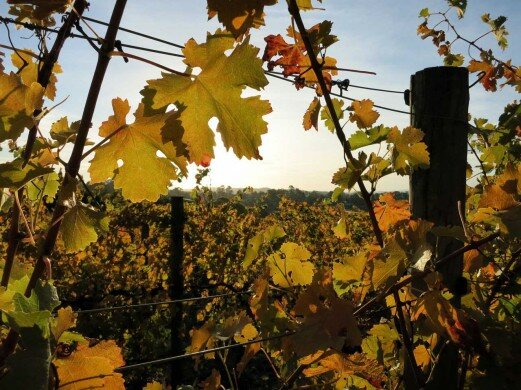
Annual vintage day at her grandparents’ Yarra Valley vineyard was one of childhood’s most memorable times for pianist and composer Nat Bartsch.
Family and friends came to help with picking the grapes. There were lots of other children to play with and at the end of the long day there’d be a big barbecue with the adults sitting down for a well-earned rest and a glass of red wine.
But the best part for the kids was the thing they anticipated all day long.
“Dad would put all of us kids in one of the big bins you put the grapes in, hook it on to the back of the tractor and drive it around. It’s the most unsafe thing! I have no idea why we were allowed. We always used to get very excited about vintage day when we were kids,” says Nat.
With both sets of grandparents living next door to each other on their own properties, the family vineyard holds a special place in Nat’s heart.
Now aged 30 and living a busy professional musician’s life in Melbourne’s inner north, she treasures these memories and relishes any time she can spend back on the vineyard.
It’s not just the quietness and fresh air; nor the embracing green and sunlit hills (when the weather is good) that Nat enjoys. The life of a freelance musician can be very complex, stressful and competitive, particularly when you live with bipolar disorder as Nat does. She finds the physicality and simplicity in working on the vineyard soothing.
“It is probably one of the places where I can find the most peace in life. There is something very simple about agricultural work; it’s very repetitive. Working with other people you have all this space to have conversations. If my sister and I are picking grapes we get to spend great quality time together. It allows for a lot of reflection.”
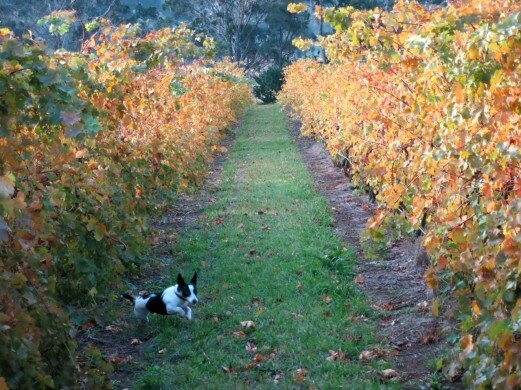
“And when the leaves start to turn in the vineyard in autumn, the weather can still be quite mild. It’s just the most beautiful place.”
Growing up in the Dandenongs with the State Forest as her playground, Nat has always found the natural environment very peaceful, whether it’s the Yarra Valley, Phillip Island, Tasmania, or a picturesque fjord-side village in Norway, where Nat once studied.
“Someone said to me once that my trio’s most recent album, To Sail To Sing, reminded them of the Tasmanian wilderness. It’s quite possible [that my love of landscape and the natural environment comes out in my music] but I don’t necessarily have it in mind when I’m composing or performing. I try to make music that’s very reflective and lyrical; sort of lush, warm and open and I guess you can associate all of those things with the natural environment.”
There is some connection there, but it is not necessarily a conscious choice, she says. It just happens.
This family vineyard does not sell its wine commercially and in recent years has sold the grapes to other vineyards.
Nat’s grandfather planted the first vines in the mid 1970s and in the mid-1980s Nat’s father and uncle replanted the cabernet sauvignon and merlot vines from which they now make the wine. However, this year, Nat was intimately involved in the winemaking process: she and her sister have just completed the 2014 vintage and it is now resting safely in the French oak barrels where it will stay for four years.
“The fact that my dad has planted and nurtured this and made it something really special means a lot,” says Nat, but she sadly acknowledges that the future of the vineyard is not certain. With the grandparents no longer able to work it, and the younger generations employed elsewhere, it may be that this family winery will soon be sold. “Like any family farm, it is dependent on the next generation being interested. This has always been a kind of side project, never anyone’s main source of income. My sister and I have developed more interest in it in the last year or so, which is probably coming at a time when we just get to enjoy the tail end of it. It’s very sad.”
Nat is hopeful the vineyard will stay in the family, at least until she and her partner can be married there.
Not just another Yarra Valley wedding, this one will have a real connection to the land and its history.
www.natbartsch.com
Winery images supplied with permission ©Nat Bartsch 2014